
Have you ever looked at a cosmetic ingredient list and paused at names like "Ceramide NP" or "Ceramide EOP"?
Even when a product says it contains ceramides, it can be hard to understand what the differences between these letter combinations actually mean.
In this article, we'll explain the basics of human-type ceramides and the differences between the five types—EOP, NP, AP, NG, and AG—in easy-to-understand terms.
- Does Any of This Sound Familiar?
- What Are Ceramides, and What Makes Human-Type Ceramides Different?
- A Simple Guide to the Five Types of Human-Type Ceramides
- How Should You Choose a Ceramide Product?
- How to Care for Dry Skin in Fall and Winter
- Our Recommended Booster Serum
- Daily Habits to Support Your Skin from Within
- Frequently Asked Questions
- Summary
Does Any of This Sound Familiar?
- I've been choosing products based only on the words "contains ceramides."
- I don't know what labels like EOP and NP mean.
- I assumed that all products labeled "human-type ceramides" were the same.
- My skin has suddenly started feeling dry now that fall has arrived.
- I tend to choose skincare based only on price or brand image.
What Are Ceramides, and What Makes Human-Type Ceramides Different?

Ceramides Help Fill the Gaps to Keep Skin Moisturized
The outermost layer of your skin, known as the stratum corneum, is often compared to a wall made of bricks and mortar.
The bricks represent skin cells, while the mortar filling the gaps between them represents intercellular lipids. Ceramides are one of the key components of this mortar.
They help retain moisture and reduce water loss. That's why ceramides attract so much attention when the air becomes dry.
"Human-Type" Means Having the Same Structure as Ceramides Found Naturally in Human Skin
Human-type ceramides are ceramides with the same structure as those naturally found in human skin.
However, the term "human-type" may be used somewhat differently by different companies. One useful way to identify them is to look for ingredient names such as "Ceramide NP" and "Ceramide EOP" on the ingredient list.
There Isn't Just One Type of Ceramide
Human skin contains various types of ceramides. The letters EOP, NP, AP, and others indicate these different types.

A Simple Guide to the Five Types of Human-Type Ceramides
We've saved the more technical chemistry for the "Want to Learn More?" section below. First, let's take a look at the basic differences at a glance.
| Name | In Simple Terms |
|---|---|
| Ceramide EOP | A distinctive type with a longer, more complex structure |
| Ceramide NP | A common type frequently found in skincare products |
| Ceramide AP | A type closely related to NP, like a sibling |
| Ceramide NG | A type with a different base from NP and AP |
| Ceramide AG | A type closely related to NG, like a sibling |
The important thing to remember is that this isn't about deciding which type is the most effective.
Different types of ceramides naturally coexist in the skin.
For this reason, some skincare products combine several types of ceramides based on the idea that a variety of types more closely reflects the composition of skin.
Want to Learn More? Understanding Ceramide Names
Ceramides are made up of two components: a fatty acid and a sphingoid base. The first letter (or the first two letters in the case of EO) indicates the fatty acid, while the final letter indicates the sphingoid base.
| Letter | Meaning | Component |
|---|---|---|
| N | Non-hydroxy fatty acid | Fatty acid |
| A | Alpha-hydroxy fatty acid | Fatty acid |
| EO | Ester-linked omega-hydroxy fatty acid | Fatty acid |
| P | Phytosphingosine | Sphingoid base |
| G | Dihydrosphingosine | Sphingoid base |
For example, "NP" combines a non-hydroxy fatty acid (N) with phytosphingosine (P). NP and AP share the same phytosphingosine base, making them "siblings." Similarly, NG and AG share the same dihydrosphingosine base.
Older naming conventions used numbers such as Ceramide 1 and Ceramide 2, but these numerical names are less commonly used in current ingredient labeling.
How Should You Choose a Ceramide Product?
Focus on These Three Things
① Check whether the ingredient list specifies names such as "Ceramide NP"
Ingredient lists that identify the specific ceramide type provide more information than a general claim that a product "contains ceramides."
② Check whether it contains other moisturizing ingredients
The combination of ingredients, such as niacinamide and squalane, can also influence how a product feels on your skin.
③ Make sure it suits your skin
If you have sensitive skin, try the product on a small area, such as the inside of your arm, before applying it to your entire face.
More Types Don't Necessarily Mean a Better Product
The number of ceramide types alone does not determine the quality of a skincare product. Texture, other ingredients, and how well the product suits your skin are equally important.
How to Care for Dry Skin in Fall and Winter

Skin Loses Moisture More Easily in Fall and Winter
As humidity drops and indoor heating adds to the dryness, fall and winter are seasons when skin can lose moisture more easily.
After a summer of UV exposure and air conditioning, many people find that their usual skincare routine no longer feels sufficient when the dry season arrives.
Four Simple Tips You Can Start Today
・Wash your face with lukewarm water and avoid rubbing
・Apply skincare soon after washing (before your skin starts to dry out)
・Follow this order: booster serum → toner → lotion or cream
・Pay attention to indoor humidity (a humidifier or even a damp towel can help)
Our Recommended Booster Serum
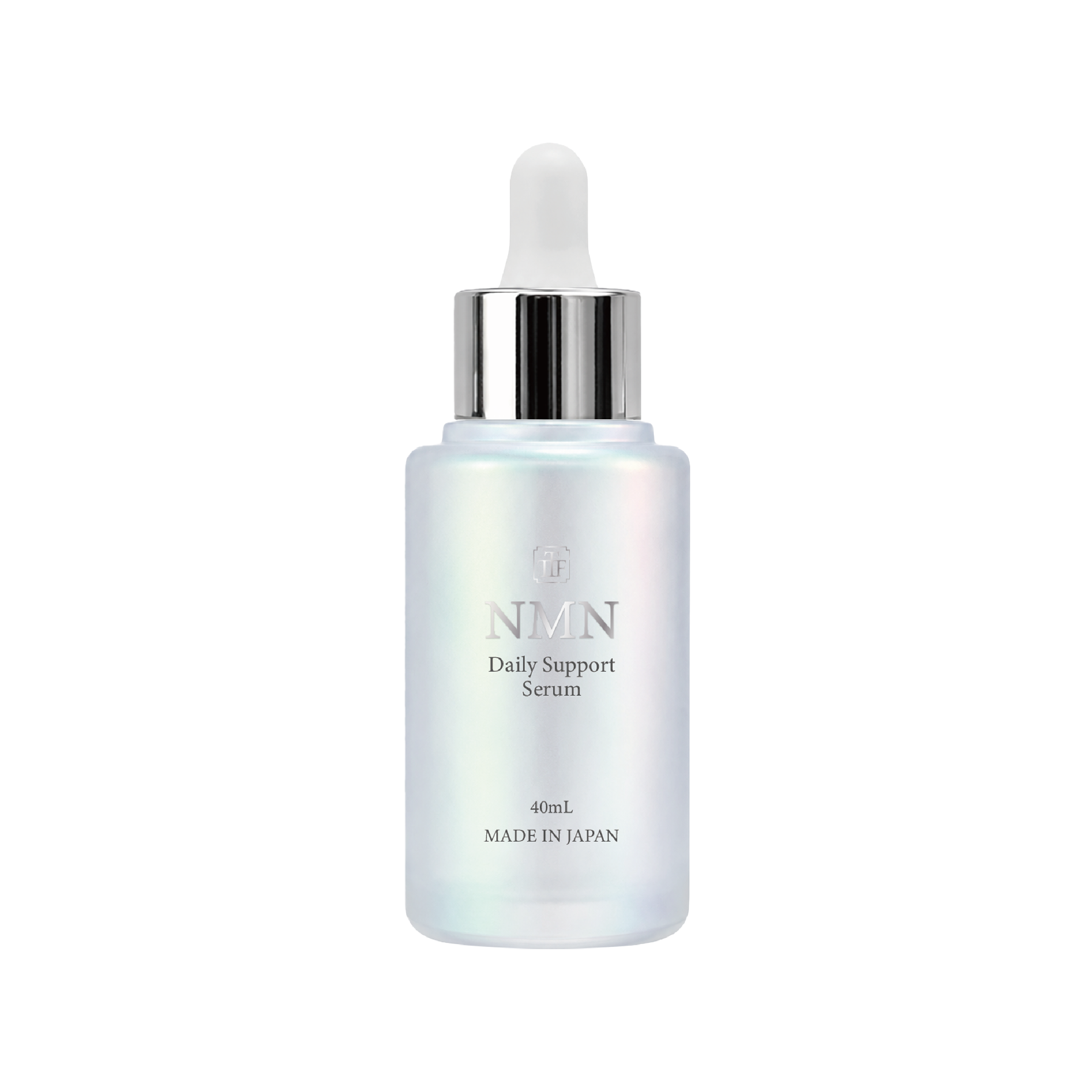
TTF NMN Serum combines five types of human-type ceramides.
The formula contains five ceramides: Ceramide EOP, NP, AP, NG, and AG.
It also contains niacinamide, NMN (nicotinamide mononucleotide), squalane, sunflower seed oil, and other ingredients. This two-phase, oil-in booster serum separates into a water layer and an oil layer. Shake well before use and apply after cleansing, before toner.
Ideal for: Those who want to incorporate several moisturizing ingredients into a single step of their skincare routine.
Daily Habits to Support Your Skin from Within
Sleep and Nutrition Are the Foundation of Healthy Skin
In addition to skincare, your daily sleep and eating habits help support your skin's condition. Try to maintain a balanced diet that includes protein and vitamins. (Related article: How to Choose a Vitamin C Supplement)
Moisturize After Bathing and Washing Your Face
After a bath or washing your face, your skin can lose moisture more easily. Making skincare your first step before drying your hair can help you avoid leaving your skin dry for too long.

Frequently Asked Questions
Summary
Here are the three key takeaways from this article.
① Ceramides help fill the gaps between skin cells to retain moisture. Human-type ceramides have the same structure as those found naturally in human skin.
② EOP, NP, AP, NG, and AG are different types of ceramides. Rather than focusing on one "best" type, consider the combination of different types.
③ When choosing a product, look at whether the specific ceramide types are listed, how the ingredients are combined, and whether the product suits your skin.
Once you understand the names on ingredient lists, choosing skincare products can become much easier and more enjoyable. Take the time to understand your skin's needs and find a product you feel confident using.
Note: This article does not guarantee any specific effects or benefits. Discontinue use if the product does not suit your skin.